


Urban Runoff
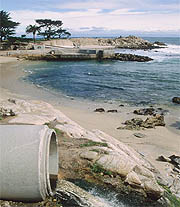 Urban runoff or 'storm drain pollution' is one of the leading causes of water pollution in this country. Urban areas may contain up to 90 percent hard, impervious surfaces such as rooftops, sidewalks, streets, construction sites and parking lots and pavement where water collects and quickly runs off. Any deposits of oil, grease, pesticides, herbicides, soil, pet waste, etc. in these areas are flushed by rainwater and other means down storm drains. Water flowing through storm drains is untreated and therefore carries these pollutants into rivers or the bay.
Offshore areas of the Sanctuary are in relatively good condition, but nearshore coastal areas, harbors, lagoons, estuaries and tributaries show a number of problems including elevated levels of coliform bacteria, detergents, oils, nitrates, sediments, and persistent pesticides such as DDT and toxaphene. These contaminants can have a variety of biological impacts including bioaccumulation, reduced recruitment of anadramous species, algal blooms, transfer of human pathogens and interference with recreational uses of the Sanctuary due to beach postings and closures. The concentrations of pollutants can cause stress for aquatic organisms especially during the first few minutes of the first major rainstorm of the winter season, the "First Flush". This problem becomes worse with population growth and urbanization because such activities alter natural water processes and create more impervious surface areas.
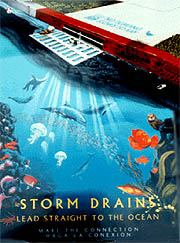 Because urban runoff is nonpoint source pollution, no single source, work to prevent it must be far-reaching and cover many different aspects. As part of the sanctuary's Management Plan "WQPP Action Plan I: Implementing Solutions to Urban Runoff", seven strategies are outlined, each having a number of activities that when completed will result in a coordinated program addressing urban runoff. The Water Quality Protection Program (WQPP) works with cities and counties to develop ways to address urban runoff on many fronts through the Municipal Separate Storm Sewer System (MS4) permits from the Regional Water Quality Control Board (RWQCB).
What's Being Done Now?
Work to carry out the strategies listed in the Urban Runoff Action Plan is being conducted by staff from various agencies, local cities, counties, and the MBNMS. Cities and counties are required by the State Water Quality Control Board (SWQCB) and Regional Water Quality Control Boards (RWQCBs) to address common sources of urban runoff pollution and take measures to correct any issues. In many cases the work being done by the cities for MS4 permits also addresses the Urban Runoff Action Plan strategies.
 Urban Runoff Action Plan highlights include:
- Increasing public education and outreach to help better inform the public about urban runoff, water quality and watershed issues.
- Collaborative implementation of the Model Urban Runoff Program (MURP) with the cities of Monterey, Pacific Grove, Seaside, Monterey County, Carmel, Marina, Del Rey Oaks, and Sand City through the Monterey Regional Storm Water Management Program (MRSWMP).
- Increase and improve technical training for city and county public works and planning staff, to prevent urban runoff pollution and adopt California Environmental Quality Act (CEQA) guidelines.
- Support and collaborate with regional monitoring programs.
- Support ongoing monitoring by citizen's groups in watersheds that drain to the Sanctuary including Urban Watch, and First Flush.
Residents play an especially important role in connecting actions on their property to water quality in the sanctuary. Educational efforts are wide ranging and include helping individual citizens to understand what they can do to minimize their own impacts and improve urban runoff.
For more information please check out these links:
- Monterey Bay National Marine Sanctuary Water Quality Program
- Monterey Bay National Marine Sanctuary Management Plan
- Monterey Bay National Marine Sanctuary's 2015 Condition Report Partial Update
- Monterey Regional Stormwater Management Program (MRSWMP)
- What Can You Do to Reduce Urban Runoff Pollution?