

Resource Issue: Cruise Ships
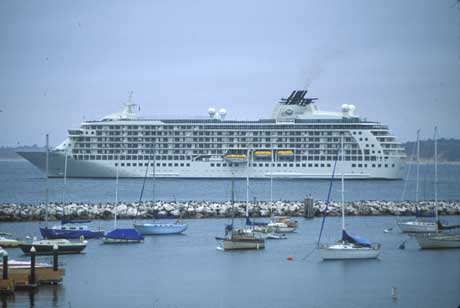
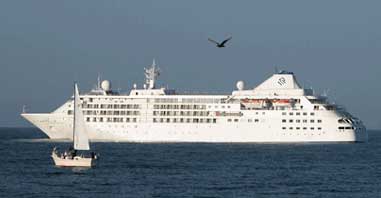 Large cruise ships began visiting Monterey in 2002. These ships can provide local businesses with economic benefits, particularly if they introduce the region to tourists who may return for later visits. However, both the public and businesses have raised concerns about environmental issues associated with these ships.
Due to cruise ship visitation to Monterey Bay, and concern over potential impacts to marine resources from these vessels, this issue has drawn significant attention from the public. At the February 7, 2003 meeting, the MBNMS Advisory Council passed a resolution recommending that MBNMS staff pursue a regulatory prohibition on harmful discharges from cruise ships.
As a result of the 2008 MBNMS Management Plan, MBNMS regulations were amended to prohibit the discharging or depositing from within or into the MBNMS any material or other matter from a cruise ship except clean vessel engine cooling water, vessel generator cooling water or anchor wash. The 2008 Cruise Ship Action Plan was also developed and outlines specific strategies and actions for addressing the threats posed by harmful cruise ship discharges. It included outreach to the cruise industry regarding Sanctuary policies, developing enforcement and monitoring programs and creating a cruise ship passenger education program. Since many of these activities have been completed, the cruise ship action plan will be updated to a strategy and added to the new management plan, now under development.
Under the Clean Water Act and MBNMS regulations, the following prohibitions apply within the sanctuary:
- MBNMS regulations prohibit the discharge of raw sewage and require that discharges from vessels throughout the Sanctuary occur through a properly functioning Type I or Type II MSD that meets the standards of Section 312 of the Clean Water Act.
- MBNMS regulations generally prohibit discharges to the Sanctuary, but provide an exception for discharges from routine vessel operations as mentioned above.
- MBNMS regulations prohibit the discharge of oily wastes from bilge pumping at any concentration.
How is the Sanctuary involved?
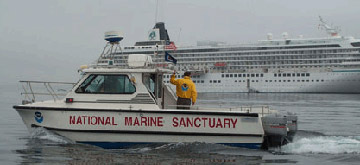
 US Coast Guard is the federal agency with jurisdictional authority to board and inspect maritime vessels. Together, the US Coast Guard and MBNMS conduct random, joint inspections of cruise ships visiting Monterey to verify their adherence with Sanctuary and Coast Guard regulations. Inspectors review ship logs, interview crew members, and physically inspect engine room, waste management, and other work spaces to ensure that prescribed environmental safeguards and practices are in order.
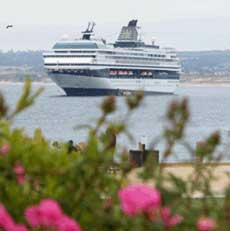
In addition, in 2002 in consultation with Monterey Harbor, an anchorage area was established to minimize impacts to marine habitat, while meeting logistical requirements for safe and smooth transfer of passengers to and from the ships. The two sites are Anchorage A (preferred) which is about 700 yards outside the Monterey Harbor entrance, and Anchorage B (alternate) which is about 2,500 yards from the Monterey Harbor entrance. The anchorages were established over sandy seafloor areas to avoid the reef habitat.
Cruise ships are maneuvered into the designated anchorages by an experienced San Francisco bar pilot familiar with these waters and local maritime controls here. Once a ship's anchor is set, the ship's position is carefully monitored by navigation equipment and the deck crew 24 hours a day. The bar pilot remains aboard the cruise ship from arrival through departure. Standard ship operations include provisions for avoiding wildlife, and the sound of the ships' large engines and propellers readily transmit their position and progress through the water to wildlife in their path. Some ships may use apps, such as Whale Alert 2.0, for information about whale presence along their routes.
Once anchored, visiting ships lower their passenger launches onto the water to ferry passengers to and from the harbor. The Harbor provides dock space for passenger loading and unloading.
Lastly, there are extensive federal and state regulatory requirements for contingency spill planning and preparedness that govern cruise ships. The California Office of Spill Prevention and Response establishes vessel spill response standards, conducts inspections, and enforces compliance under Title 14 of the California Code of Regulations, Sections 825.01 - 827.02. The US Coast Guard also inspects cruise ships regularly for enforcement of federal safety and environmental laws, including spill response preparedness.
Environmental Impacts of Cruise Ships and Current Regulation
 Due to their sheer size and capacity for passengers, cruise ships can cause serious impacts to the marine environment. The main pollutants generated by a cruise ship are: sewage (also referred to as black water); gray water; oily bilge water; hazardous wastes; and solid wastes.
Sewage
Sewage includes vessel sewage and wastewater from medical facilities. Sewage from ships is generally more concentrated than that from land based sources, as it is diluted with less water when flushed (three quarts versus three to five gallons). Sewage discharge can contain bacteria or viruses that cause disease in humans and other wildlife. It can present a public health concern, if discharged in the vicinity of marine life harvested for human consumption, or in or near waters used for recreational activities such as swimming, diving, or boating. Nutrients in the sewage can cause eutrophication, whereby excessive growth of algae depletes oxygen and can lead to the death of fish and other organisms. Additionally, chemicals and deodorants including chlorine, ammonia, or formaldehyde are often used in Marine Sanitation Devices (MSD) (http://water.epa.gov/polwaste/vwd/vsdmsd.cfm) and can present a threat to marine organisms. Volumes of sewage for a typical cruise ship have been estimated at 8.4 gallons per person per day, or 147,000 gallons per week.
Graywater
Graywater consists of wastewater from sinks, showers, laundry, and galleys. It can contain a number of pollutants including: suspended solids, oil, grease, ammonia, nitrogen, phosphates, copper, lead, mercury, nickel, silver and zinc, detergents, cleaners, oil and grease, metals, pesticides, and medical and dental wastes. A typical cruise ship produces an estimated 1,190,000 gallons of graywater per week.
Bilge Water
Bilge water consists of fuel, oil, and wastewater from engines and machinery that collects, along with fresh water and seawater in the area at the bottom of the ship's hull, as a result of spills, leaks, and routine operations. It may also contain other materials such as rags, cleaning agents, paint, and metal shavings. A typical cruise ship generates an estimated 18,500 gallons of bilge water per week.
Ballast Water
Cruise ships take in millions of gallons of ballast water, in order to stabilize the vessel for safe and efficient operation. During the process they take in thousands of species of marine organisms, including various types of larvae, fish eggs, and microorganisms. The water is often drawn in from coastal waters in one area, and discharged at another location. This process has led to the introduction of invasive species, which disrupt marine ecosystems, and cost the U.S. billions of dollars per year.
Ballast water operations are currently regulated by Marine Invasive Species Program administered by the State Lands Commission. The California Marine Invastives Species Program (http://www.slc.ca.gov/Spec_Pub/MFD/Ballast_Water/Ballast_Water_Default.html) requirements vary depending on whether the vessel arrives from inside or outside of the Pacific Coast Region, and whether ballast water is from inside or outside of the Pacific Coast Region.
Hazardous Materials
Hazardous wastes produced on cruise ships include by-products of dry cleaning and photo processing operations, paints and solvents, batteries, fluorescent light bulbs containing mercury, and wastes from print shops. A typical ship produces an estimated 110 gallons of photo processing chemicals, five gallons of dry cleaning wastes, and ten gallons of used paints per week. These substances can be toxic or carcinogenic to marine life.
Solid Wastes
Plastic debris can be ingested or cause entanglement to marine life including marine mammals, seabirds, and sea turtles. Solid wastes generated by cruise ships include large volumes of food waste, cans, glass, wood, cardboard, paper, and plastic. In some cases the wastes are incinerated on the vessel and the ash is discharged at sea; other wastes are disposed of on shore or recycled. The Marine Plastic Pollution and Control Act regulate the disposal of plastics and garbage pursuant to ANNEX V of MARPOL. Under these regulations the disposal of plastics is prohibited in any waters, and floating dunnage and packing materials are prohibited in navigable water within twenty-five nautical miles from land. Other garbage including paper, glass, rags, metal, and similar materials is prohibited within twelve nautical miles from shore (unless macerated, in which case it can be disposed of on land).
Cruise Line Industry Violations
The cruise line industry historically has had a relatively poor record regarding environmental violations. The vast majority of cruise ships are foreign flagged. According to a report published by the Government Accounting Office, there were eighty-seven confirmed illegal discharge cases from cruise ships between 1992 and 1998 in U.S. waters. Eighty-one of these cases involved oil, and six involved plastic or garbage. Seventy-five percent of these violations were accidental (human or mechanical error).
Cruise Line Industry Initiatives
A number of cruise lines have made significant improvements to address environmental concerns in recent years. The Cruise Lines International Association (CLIA) (http://www.cruising.org/) is the main trade association that represents 16 of the world's largest cruise lines (95% N American Market, 85% worldwide), and serves as a consultative organization to the International Maritime Organization (IMO) (http://www.imo.org/). CLIA lines reported a reduction in waste by more than 50% between 1992 and 2002. In 2001, the Cruise Industry Waste Management Practices and Procedures document was adopted by CLIA members, and is now a mandatory condition for membership in the organization. Several cruise lines have adopted even more stringent voluntary measures, including Celebrity cruises, whose vessels are required by corporate policy to discharge black water no closer than 12 miles from shore.
RELATED LINKS:
- City of Monterey Harbor Office Cruise Ship Schedule
- U.S. EPA Cruise Ship Water Discharge Website
- EPA Cruise Ship Discharge Assessment Report
DOWNLOADABLE DOCUMENTS (PDF):
- EPA Cruise Ship White Paper (60K PDF file)
- US GAO Report on Cruise Ship Pollution (548K PDF file)
- State of California Cruise Ship White Paper (352K PDF file)
- Assessment of Cruise Ship and Ferry Wastewater Impacts in the State of Alaska (816K PDF file)
- Cruise Industry Waste Management Practices and Procedures (40K PDF file)
- Ocean Conservancy's Cruise Control Report (58K PDF file)